



johndoe@gmail.com

By Cecilia Leong-Salobir
As a food historian I have been researching and writing about other people’s food cultures for two decades. Having put my own food culture on the backburner, I am now re-tasting and reflecting on the food that I grew up with, neglected for some years as I roamed across the world. Mother Hakka is part memoir and part Hakka global food history as I trace my childhood memories in a Hakka household in British North Borneo, the present day Malaysian state of Sabah. In the past two years I have shared many a Hakka repast with Hakka communities in Australia, Singapore, Malaysia, India, Mauritius, Jamaica and Canada.
The Hakka people are a Chinese group originating from north central China, who from the 1800s settled in southern China and throughout the world. Today, about 40 million comprise the Hakka diaspora, with about the same number in China. Defined by language and food, the Hakkas self-perpetuate their characteristics of adaptability, diligence, resilience and thrift.
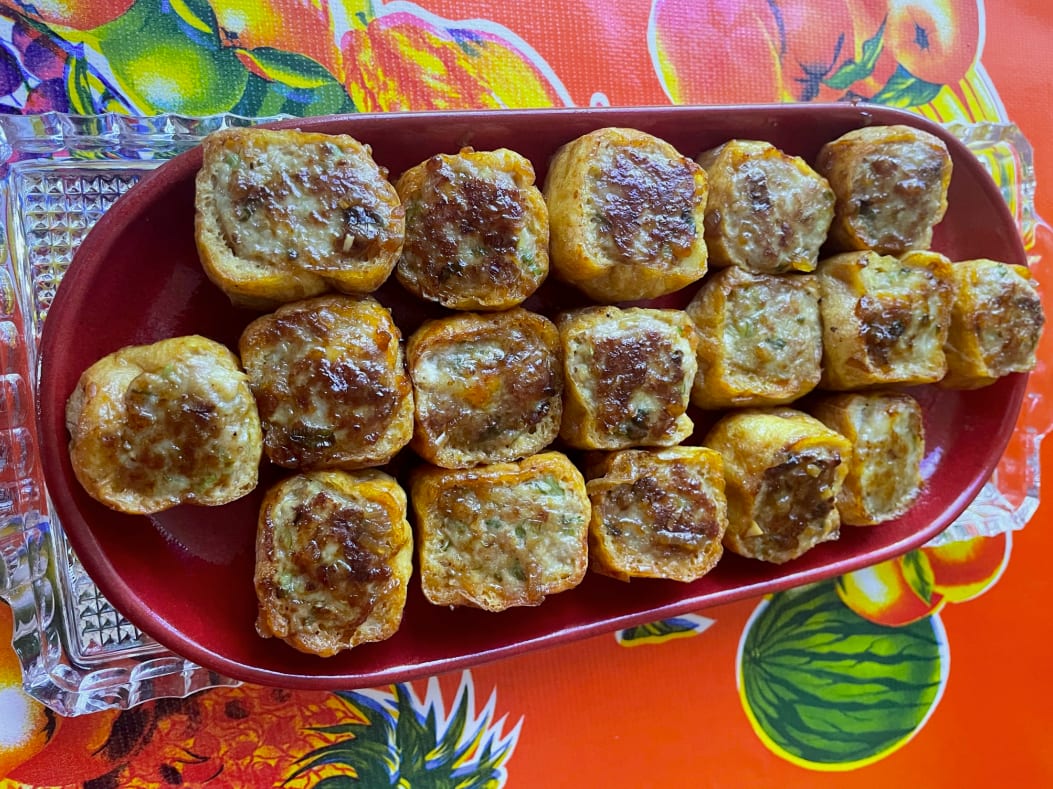
Hakka cuisine is hearty, utilising much pork, beef and chicken, and condiments like red fermented bean curd, soya sauce, fermented black beans, star anise and other aromatics. Some of the important Hakka dishes from Sabah are pork and yam (kew nyuk), stuffed tofu (ngiong tew fu), egg roll (chun ken), salt baked chicken, poached chicken (pak cham gai) and beef balls. Until I embarked on this research, I had not tasted several Hakka dishes in neighbouring Malaysian states, such as lei cha, za nyuk and abacus beads. The multiple ways of cooking and eating Hakka food at home and in public eateries are influenced not only by the ingredients available but by dominant cultures in new environments.
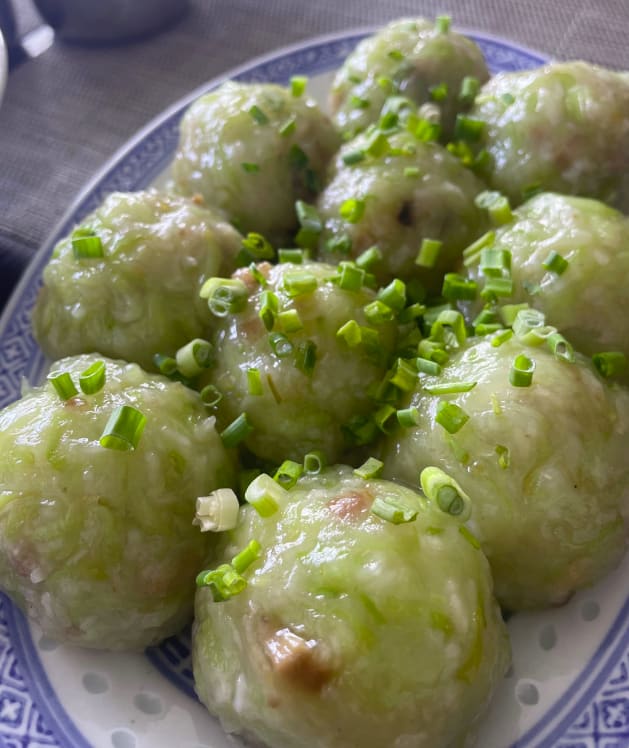
This is evident, for example, in Mauritius, where the radish and meat dumpling from China evolved to boulette chouchou, a dumpling utilising chayote, meat and other ingredients when radish was hard to come by in the early years of Hakka settlement. Its French-ified name is a consequence of Mauritius’ French colonial past. On my visit in September 2024 to Mauritius, I asked every Chinese I met in Chinatown in Port Louis: “Are you Hakka?” Inevitably I was greeted with the response “Oui!” Later, when I recounted this at a lunch party in the home of Maxime King, new-found Hakka friends laughed uproariously. They remarked, “we can’t even say ‘yes’ in Hakka!” And yet at this lunch table I was treated to a magnificent feast of predominantly Hakka dishes.
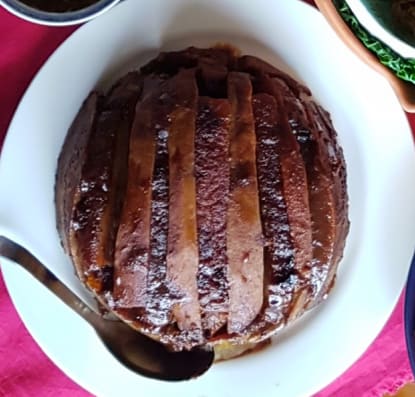
In Jamaica I encountered Hakka dishes almost identical to those that I ate as a child and teenager in Sandakan. In Hakka homes the food is faithful to those dishes cooked by generations past as in pak cham gai, kew nyuk, mushroom chicken (tung gu gai), and comfort foods like steamed egg custard with pork and rice congee (juk). While Chinese restaurants here serve both Hakka and other Chinese regional dishes, the Hakka dishes are not influenced by other cuisines. To cater to the Jamaican taste for spicy flavours, there is always the ubiquitous small dish of fresh cut chillis (Scotch Bonnets) in soya sauce on the Hakka restaurant table.
This is in contrast to “Hakka” restaurants in Kolkata, India, where Hakka dishes remain in name only, with abundant use of chillis and other spices. In India, Hakka food is, by and large, Indian-ised, with added spices. Hakka restaurateurs have teased the Bengali palate with Indian spices to Chinese ingredients and Chinese ways of cooking. Chinese food manufacturers have successfully concocted spicy sauces for both restaurants and home cooking.
When I came across the “Hakka” dishes in Kolkata that are so loved by Indians, and learnt that they have become popular in Canada, I was determined to trace this trajectory of Hakka restaurateurs from Kolkata to Toronto. This hybrid cuisine of Indian-Hakka elements involves the adding of spicy ingredients to Hakka dishes, sometimes creating new dishes. A Hakka speaker unfamiliar with this Indian-Chinese type of cooking will be bewildered at the names of these dishes purporting to be Hakka, such as chilli chicken, Manchurian chicken, chilli paneer, lollipop chicken, chicken pakora and chilli beef.
Political events brought hundreds of thousands of Chinese from China and Hong Kong to Canada in the late twentieth century, resulting in the opening of restaurants featuring different regional Chinese cuisines. However, it was the Indian Hakka cuisine that has forever changed the culinary landscape of the ethnoburbs and other parts of the Greater Toronto Area.
There was a time when I was unaware of the loving childhood I had, nor did I appreciate the unique foodways of the Hakka people. On reflection, I acknowledge the caring family environment that our parents created for us. While the Chinese in my parents’ generation did not demonstrate love verbally or physically, they expressed it by preparing nutritious soups and tonics, and proffering choice morsels at the dinner table, where food was served with love.
Dr Cecilia Leong-Salobir is a food historian affiliated with the University of Western Australia. Her books on food history are Urban Food Culture: Sydney, Shanghai and Singapore in the Twentieth Century (Palgrave Macmillan 2019); Routledge Handbook of Food in Asia (editor, 2019); and Food Culture in Colonial Asia: A Taste of Empire (Routledge 2011). She serves on editorial advisory boards for Bloomsbury Food Library, Food, Culture & Society and Global Food History.
