



johndoe@gmail.com

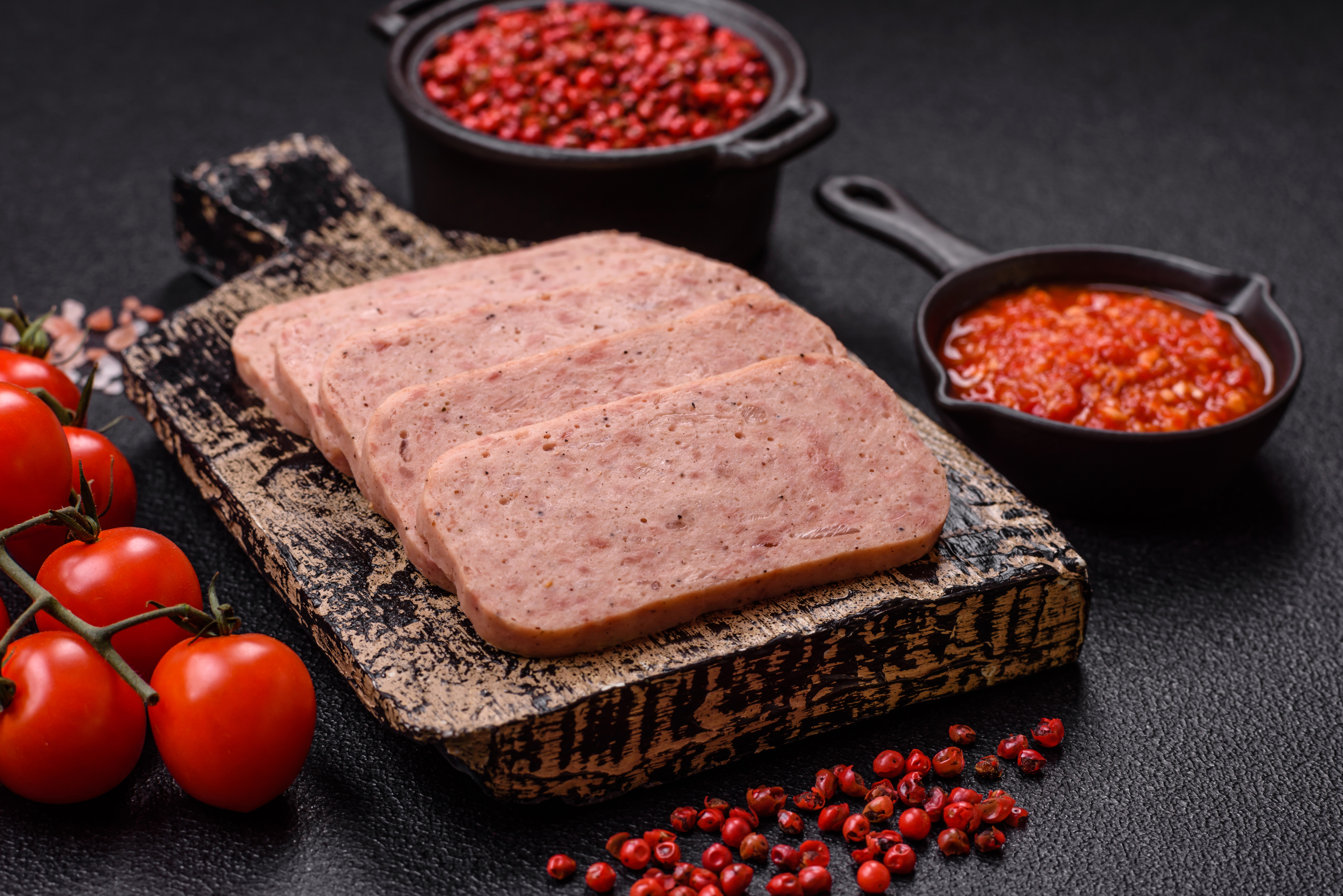
SPAM is one of the most iconic American foods known throughout the world. But it gets a bad rap, particularly in the United States. Its notoriety, or infamy, is due to the many myths and misconceptions that surround the processed pork’s creation, production and consumption. The common narrative around SPAM goes as follows: it is a mystery meat, whose name comes from the portmanteau of spiced ham, it was created in the Second World War, and it is universally disliked today. All of these myths are untrue, making the canned meat perhaps one of the most misunderstood foods on the planet.
The Hormel Foods Corporation, which was founded in Austin, Minnesota in 1891, prided itself on being, quite literally, a cut above the rest. While meat producers, particularly those in Chicago where the largest meat processing facilities in the world at the time were located, were churning out dubious cuts of meat, George A. Hormel founded a company that emphasized top quality pork products for its customers. As canning took hold of the American market in the late nineteenth and early twentieth centuries at companies such as Heinz and Campbell’s, Hormel was not far behind, creating the world’s first canned ham in 1926. Working to expand his line of canned products, Hormel came out with SPAM’s cousins, Dinty Moore Stew and Chili Con Carne in 1935, which are also classic American foods in their own right.
SPAM, itself, was a product solution to a manufacturing problem. Processing pork for its many products, Hormel was left with too much pork shoulder on its hands. Difficult to utilize as a touch cut of the meat and of little value at the time to most of the consuming public, inventors at the Hormel plant came up with a solution: grind up the pork shoulder, add salt, sugar, water, and sodium nitrite as a preservative, seal and cook it in a can, and voila - SPAM was born. There wasn’t and still isn’t a mystery to this basic formula, which remains largely unchanged from its inception in 1937.1 No mystery meat inside, just processed pork with a handful of ingredients, most of which consumers can find in their own pantry.
On the other hand, the name SPAM is quite a mystery. Many have speculated that the pork product’s name is an acronym of “Spiced Ham”. Others have taken liberties with the acronym (some derogatory) over the years, such as “Special Processed American Meat”, and “Stuff Posing as Meat”. The name, according to official Hormel history, was dreamed up by a guest at a Hormel party.2 But the company is tightlipped and has never revealed the meaning behind the name.
SPAM is best known for being a Second World War staple in many parts of the world, leading many people today to erroneously assume that it was originally produced in and for the war. Consumers little suspect its Great Depression origins before coming into its own during the war. As part of its war effort, the U.S. government created the Lend-Lease Program in 1941, which provided war supplies, including military hardware, medical supplies and food to the Allied countries. Hormel, along with many other U.S. food producers, contributed to this effort by shifting much of their manufacturing lines over to producing supplies for the Allies. SPAM was one of the products that was sent to boost food rations and avert food insecurity in Britain. The British people were fed large amounts of SPAM as a means to supplement their meagre ration of meat, helping to sustain them through the war.
Everywhere that the Armed Forces went, SPAM was sure to follow. Service members were served a variant of SPAM in their mess halls, known as “Defense Ham”, which had a longer cure and smoke to enable it to withstand the environmental and shipping conditions in the theatres of war. In the Pacific, SPAM was also used by the Forces to provide food relief to starving populations they liberated from Japanese occupation, including the Philippines, Guam and Okinawa. The canned pork then became synonymous with war on both the civilian and military fronts, ensuring and enshrining it in the hearts and minds of people across the globe. Successive generations then passed down a taste, and often a love, for the processed pork product, particularly in the Pacific.
Today, SPAM has a very mixed reputation. In the United States, in part due to the myths surrounding the pork product, it is not consumed in great quantities, except for in Hawaii and the territory of Guam, which is down to the huge influx of servicemen and women during the Second World War. Successive waves of Asian immigrants post-war also bolstered and expanded Hawaii’s love of the canned product, which has even led to an annual festival celebrating the canned product, the SPAM Jam. 3
In Asia, SPAM is highly popular. SPAM is no longer simply a survival food, but one that has been fully embraced and utilized in new and different ways among the peoples in Asia. It has been integrated into some of the countries’ most cherished dishes, such as Filipino Spamsilog (fried rice, egg and SPAM), and Okinawan Chanpurū. SPAM has now been fully embraced as part of the countries’ foodways and culinary identities.
1. Note that after the Second World War, potato starch was added to the original formula for SPAM. Hormel added this item to the recipe to enable the ingredients to better congeal together, eliminating a layer of fat that traditionally formed inside the can during the cooking process.
2. Richard Dougherty, In Quest of Quality: Hormel’s First 75 Years (St Paul, MN, 1966), p. 159; Doniver Adolph Lund, The Hormel Legacy: 100 Years of Quality (Austin, MN, 1991), p. 69.
3. Waikiki SPAM Jam, accessed May 10, 2026, https://www.spamjamhawaii.com.
Kelly A. Spring, PhD, is an author, entrepreneur, researcher, and lecturer of food history. Kelly’s latest book, SPAM: A Global History (Reaktion Press, 2025), charts how food was used by the United States to spread its culture and values in wartime, impacting people’s foodways and lifestyles around the globe. Her food history company, The Fork Front, which is based in Washington, D.C., offers consulting, researching and writing services. Kelly co-hosts the food history podcast, The Hungry Historians, which is sponsored by Bloomsbury Food Library. She founded and is the lead convenor of the Institute of Historical Research’s Food History Seminar. To find out more about Kelly’s current projects, as well as her food musings and adventures, you can follow her on Instagram @theforkfront.
